|
|
CNIT 125: Information Security Professional (CISSP Preparation)Spring 2010 Sam BowneScores posted 6-6-10Schedule · Lecture Notes · Projects · Links · Home Page |
CNIT 125 39694 501 WED 6-9 meets in SCIE 108 6:00-7-30, then moves to
SCIE 215 & 214
|
Catalog DescriptionCovers information security in depth, including access control, application security, business continuity, cryptography, risk management, legal issues, physical security, and telecommunications and network security. This class helps to prepare students for the Certified Information Systems Security Professional (CISSP) credential, which is essential for high-level information security professionals.Advisory: Students should have taken CNIT 123, or hold the Certified Ethical Hacker credential, or have equivalent knowedge of basic security. Upon successful completion of this course, the student will be able to:
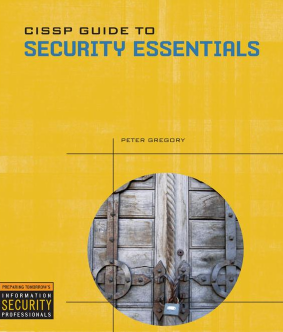
TextbookCISSP Guide to Security Essentials, 1st Edition, by Peter Gregory ISBN-10: 1435428196 Buy from Amazon |
Schedule | ||||
|---|---|---|---|---|
| Date | Quiz | Topic | ||
| Wed 1-20 | Ch 1: Information Security and Risk Management | |||
| Wed 1-27 | Ch 1: Information Security and Risk Management | |||
| Wed 2-3 | Ch 2: Access controls | |||
| Fri 2-5 | Last Day to Add Classes | |||
| Wed 2-10 | Quiz on Ch 1 | Ch 2: Access controls | ||
| Wed 2-17 | Quiz on Ch 2 | Ch 3: Application Security | ||
| Mon 2-22 | Last Day to Request Pass/No Pass Grading | |||
| Wed 2-24 | Ch 3: Application Security Training | |||
| Wed 3-3 | Quiz on Ch 3 | LOCKDOWN Ch 4: Business Continuity and Disaster Recovery Planning | ||
| Wed 3-10 | No Quiz Email keys must be published by 8 PM |
Karin Nelson: Resume Writing Workshop | ||
| Wed 3-17 | Class Cancelled | |||
| Wed 3-24 | Quiz on Ch 4 Resume due |
Ch 5: Cryptography | ||
| Wed 3-31 | Holiday - No Class | |||
| Tue 4-6 | Mid-Term Grades Due | |||
| Wed 4-7 | Quiz on Ch 5 | Ch 6: Legal, Regulations, Compliance and Investigations | ||
| Wed 4-14 | Quiz on Ch 6 | Ch 7: Operations Security | ||
| Fri 4-17 | Last Day to Withdraw | |||
| Wed 4-21 | Quiz on Ch 7 1st practice test due |
Ch 8: Physical and Environmental Security | ||
| Wed 4-28 | No Quiz 2nd practice test due |
Ch 9: Security Architecture and Design | ||
| Wed 5-5 | Quiz on Ch 8 | Ch 10: Telecommunications and Network Security | ||
| Wed 5-12 | Quiz in Ch 9 3rd practice test due |
Ch 10: Telecommunications and Network Security | ||
| Wed 5-19 | Last Class: Review | |||
| Wed 5-26 | Final Exam: 6 pm Room Science 108 | |||
Lecture Notes | |
|---|---|
| Policy | |
| Student Agreement | |
| Introduction to CNIT 125 | |
| Encrypted email setup guide | |
| 1: Information Security and Risk Management PowerPoint | |
| 2: Access controls PowerPoint | |
| 3: Application Security PowerPoint | |
| OWASP's Top Ten Web Application Risks | |
| 4: Business Continuity and Disaster Recovery Planning PowerPoint | |
| 5: Cryptography PowerPoint | |
| 6: Legal, Regulations, Compliance and Investigations PowerPoint | |
| 7: Operations Security PowerPoint | |
| 8: Physical and Environmental Security PowerPoint | |
| 9: Security Architecture and Design PowerPoint | |
| 10: Telecommunications and Network Security PowerPoint | |
|
The lectures are in Word and PowerPoint formats. If you do not have Word or PowerPoint you will need to install the Free Word Viewer 2003 and/or the Free PowerPoint Viewer 2003. | |